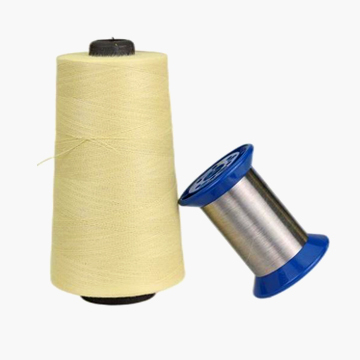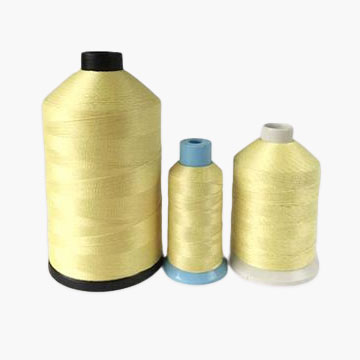
Dupont™ Kevlar® Fiber
Aromatic polyamide fibers are synthetic fibers made from aromatic raw materials through condensation and spinning. These fibers have excellent heat resistance and insulation properties, and their chemical performance is stable in operation, showing good resistance to weak acids, weak bases, and most organic solvents. The main varieties include poly-p-phenylene diamine terephthalamide fiber and poly-m-phenylene isophthalamides (MPIA).
Historical background
In the 1960s, DuPont™ in the United States developed a new type of fiber composite material. This composite material was officially commercialized in 1972, and the product was trademarked as Kevlar®.
The types include K29, K49, K129, K100, and others. This new material attracted attention due to its low density, high strength, good toughness, high-temperature resistance, and ease of processing and molding while having only one-fifth the density of steel (Kevlar® has a density of 1.44 g/cm³, compared to steel’s 7.859 g/cm³).
Kevlar® is tough, wear-resistant, and has a special combination of rigidity and flexibility. In the military, it is known as the ‘Armor Guardian’.
Performance
Mechanical Properties:
Strength: 3.6 GPa
Young’s Modulus: 131 GPa
Elongation at Break: 2.8%
Thermal Properties:
Long-term Service Temperature: 180℃
Axial Thermal Expansion Coefficient: -2 × 10^(-6) / K
Thermal Conductivity: 0.048 W/(m·K)
Fiber Characteristics:
1. Permanent heat resistance and flame retardancy, with a limiting oxygen index (LOI) greater than 28
2. Permanent antistatic property
3. Permanent resistance to corrosion from acids, alkalis, and organic solvents
4. High strength, high wear resistance, and high tear resistance
5. No melting droplets and no toxic gases when exposed to fire
6. When the fabric surface is exposed to fire, it thickens, enhancing sealing properties without cracking

Picture
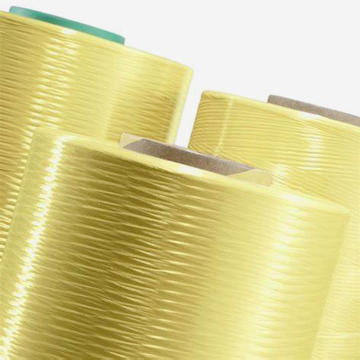
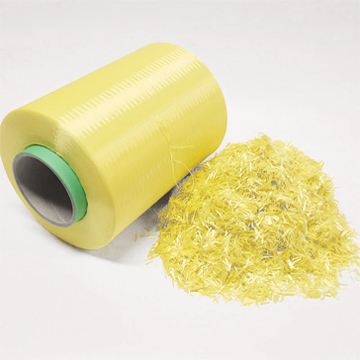
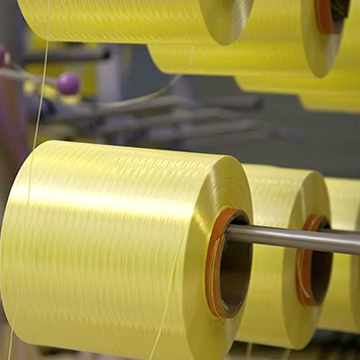
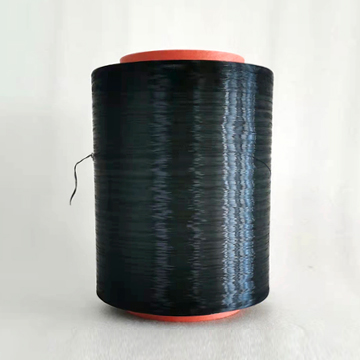
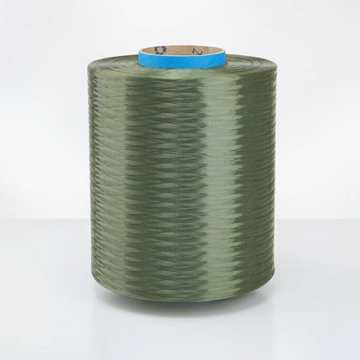
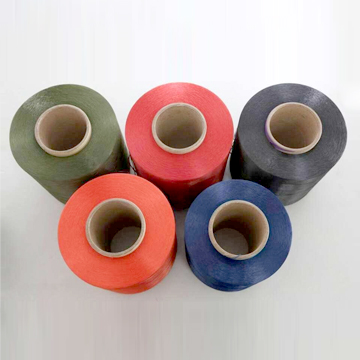
K29
| Dtex | Den | Fracture strength (N) | Elongation at break (%) | Tensile modulus (CN/TEX) | Number of filaments (F) | Length (M/KG) |
|---|---|---|---|---|---|---|
| 145 | 130 | 33.07 | 3.00 | 7216 | 87 | 69230 |
| 220 | 200 | 50.18 | 3.10 | 7015 | 134 | 45000 |
| 440 | 400 | 97.79 | 3.25 | 6567 | 267 | 22500 |
| 1100 | 1000 | 234.93 | 3.4 | 5240 | 666 | 9000 |
| 1670 | 1500 | 343.80 | 3.42 | 5146 | 1000 | 6000 |
| 3300 | 3000 | 680.20 | 3.45 | 5120 | 2000 | 3000 |
K49
| Dtex | Den | Fracture strength (N) | Elongation at break (%) | Tensile modulus (CN/TEX) | Number of filaments (F) | Length (M/KG) |
|---|---|---|---|---|---|---|
| 1580 | 1420 | 311.96 | 2.49 | 7580 | 946 | 6338 |
| 3160 | 2840 | 613.40 | 2.38 | 7890 | 1892 | 3169 |
K129
| Dtex | Den | Fracture strength (N) | Elongation at break (%) | Tensile modulus (CN/TEX) | Number of filaments (F) | Length (M/KG) |
|---|---|---|---|---|---|---|
| 3140 | 2826 | 692.10 | 3.52 | 5728 | 1333 | 3185 |
K100
| Dtex | Den | Fracture strength (N) | Elongation at break (%) | Tensile modulus (CN/TEX) | Number of filaments (F) | Length (M/KG) |
|---|---|---|---|---|---|---|
| 440 黑色 | 400 | 80 | 3.2 | 6567 | 267 | 22500 |
| 670 黑色 | 600 | 155 | 3.2 | 5797 | 490 | 15000 |
| 1670 黑色 | 1500 | 319.8 | 3.70 | 4448 | 1000 | 6000 |
| 1670 红色 | 1500 | 320 | 3.70 | 4348 | 1000 | 6000 |
| 1670 橙色 | 1500 | 318.9 | 3.70 | 4442 | 1000 | 6000 |
| 1670 金色 | 1500 | 318.9 | 3.70 | 4320 | 1000 | 6000 |
| 1670 蓝色 | 1500 | 320 | 3.70 | 4450 | 1000 | 6000 |
Compared with other fibers
Kevlar® has very high thermal stability. It can be used continuously within a temperature range of -196°C (-320°F) to 240°C (400°F) without significant changes or degradation. It is also insoluble, flame-resistant, only beginning to carbonize at 427°C, and even at the low temperature of -196°C, it does not become brittle or lose its performance. Additionally, it can withstand short-term exposure to high temperatures up to 538°C (1000°F), demonstrating excellent heat resistance.
Industrial applications
Kevlar® polymer material features are stronger, lighter, and easier to manufacture than aluminum alloy plates. In industrial applications, its tensile and flexible strength is utilized in conveyor belts, gas transmission belts, gaskets, and washers, replacing traditional toxic asbestos, with a service life up to seven times longer, offering greater efficiency.
In the automotive industry, whether in brake pads, brakes, clutches, radiators, pipes, drive belts, steel wire in radial tires, as well as starter rectifiers and engine gaskets, in the pursuit of lightweight and high-performance designs today, Kevlar® provides automotive designers with ample possibilities.
In construction, it is used for seismic reinforcement of RC bridge columns, concrete reinforcement, replacing asbestos, providing lightweight structures while maintaining the necessary structural strength.
Sports and Leisure
Kevlar® composite materials have the ability to absorb vibrations and withstand continuous impacts. They are lighter, stronger, and more resistant to damage than fiberglass-reinforced materials, which has led many aircraft and ships that originally used aluminum panels to gradually switch to Kevlar®. It can also be used for hulls and reinforcement materials, making the vessels lighter and faster. Its wear-resistant properties also meet the needs of sleds, ski clothing, sports shoes, and jeans, making it popular among outdoor enthusiasts.
Ropes, cables, communication materials
Kevlar® has replaced many applications of steel ropes and cables, ranging from thin cords to thick ship mooring cables, as well as telecommunications cables and submarine communication cables, among others.
Due to Kevlar®’s excellent strength and flexibility, the ropes made from it can withstand higher loads while being very easy to handle.
Kevlar®’s strength and tensile properties also make it an ideal material for lightweight ropes such as yacht lines and towing ropes. In addition to being lightweight and strong, Kevlar®’s non-magnetic and insulating properties make it an excellent material for communications. Fiber-reinforced optical cables have successfully replaced traditional steel cables. It is also used in balloon antennas for communications, electronic substrate materials, high-performance audio equipment, and has become a rising star in advanced high-tech transmission technology.
Safety protection
Kevlar® works on the principle of absorbing the energy from a bullet impact and dispersing it to other fibers. It is used in military bulletproof vests, bulletproof helmets, and police bulletproof vests. These soft protective materials make wearing them more comfortable and allow for greater agility.
Kevlar® is also used to make special work gloves that are more wear-resistant and less prone to cutting than gloves made from other materials, while maintaining hand flexibility and comfort. The cut-resistant and puncture-resistant properties reduce the risk of injuries, and its high heat resistance and thermal conductivity provide good fire protection while also preventing burns from high temperatures.